This knitting needle size conversion chart covers old UK, metric and US sizes, scroll down to jump straight to the tables.
I have my grandmother’s knitting needles. I’ve had them for over twenty-five years, a beautiful mix of long aluminium ones and a few older bone needles, all tucked into the same bag she always kept them in. Every single time I open that bag, I’m back in my grandparents’ bungalow. Sunday roast. Talcum powder. A hint of tobacco. It’s the most effective time machine I own, providing a gentle hug and that knot in the tummy reminding me how much I miss her.
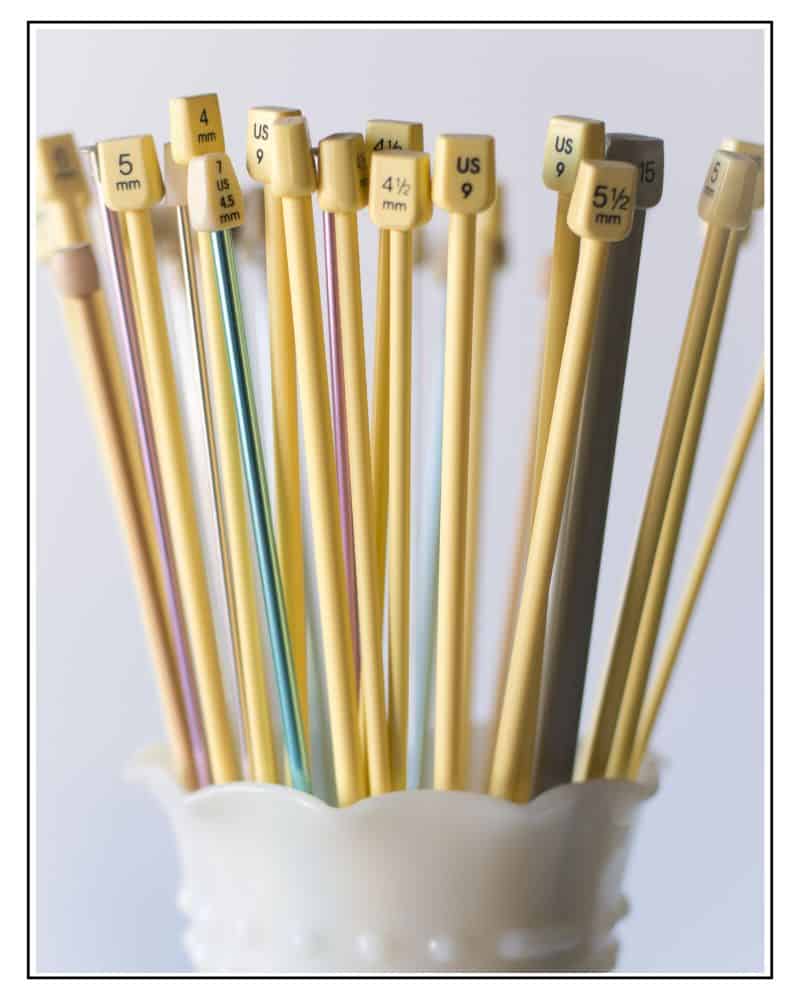
The needles are wonderful. The numbers stamped on them, however, have always been a bit of a mystery.
Before we get into the why and the how, a quick heads up. There’s a free printable version of this whole chart waiting for you at the bottom of this post, perfect for tucking into your needle bag so you’re never caught out mid pattern again. Keep reading, there’s a bit more to know first.
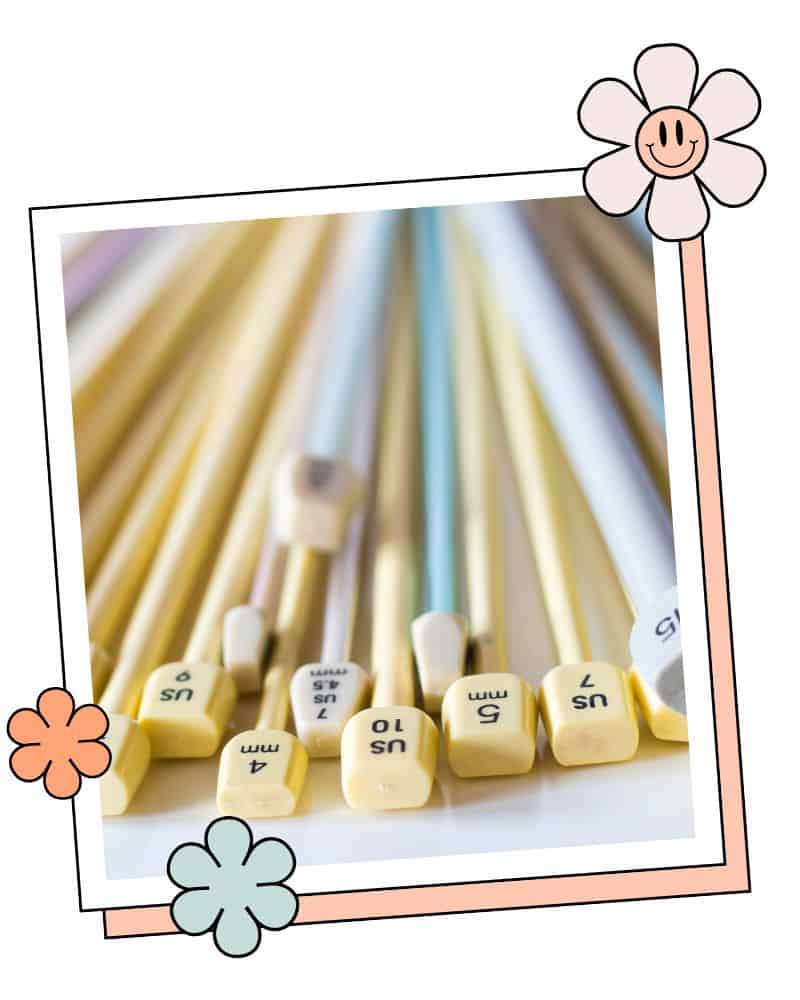
Those numbers made perfect sense in the system they were designed for. The old UK needle sizing ran in the opposite direction to metric. A size 8 is not 8mm. A size 10 is thinner than a size 8. The higher the number, the finer the needle. Logical once you know. Baffling every single time you forget, which, even after a career in knitwear design, I absolutely still do.
If you’ve ever fallen in love with a vintage knitting pattern (you know the ones, kitsch and impossibly charming, probably from the 1970s, baby on the cover with an extraordinary haircut), you’ll have had the same head scratching moment, Size 10 needles. Great. Which size 10?
This chart is the one I wish I’d had years ago. Save it, bookmark it, print it out and tuck it in your own needle bag.
Why are there three different systems? (And why does the old UK one run backwards?)
If you’re new to vintage patterns, a bit of an explanation to the old UK sizing system might help save your sanity.
The old UK system predates metric and was based on wire gauge sizing, where the gauge number referred to the thickness of the wire used to make the needle. Higher gauge number meant finer wire, which meant a thinner needle. So a size 14 is very fine, and a size 000 is quite chunky. The opposite of what you’d expect today.
Modern UK patterns now use metric sizing, which measures the actual diameter of the needle in millimetres. Simple, logical, and much easier to work with. If your pattern was published in the last thirty years or so and it says 4mm, it means 4mm.
US sizing is a separate numbering system again, running in the same direction as metric (higher number means bigger needle) but not matching it. A US size 6 is 4mm. A US size 8 is 5mm. There’s no particular logic to memorise, you just need the chart.
The golden rule: when in doubt, trust the millimetres. If your needle has the size worn off, a needle gauge will tell you the diameter, and the table below will do the rest.
Knitting Needle Size Conversion Chart: Old UK, Metric & US
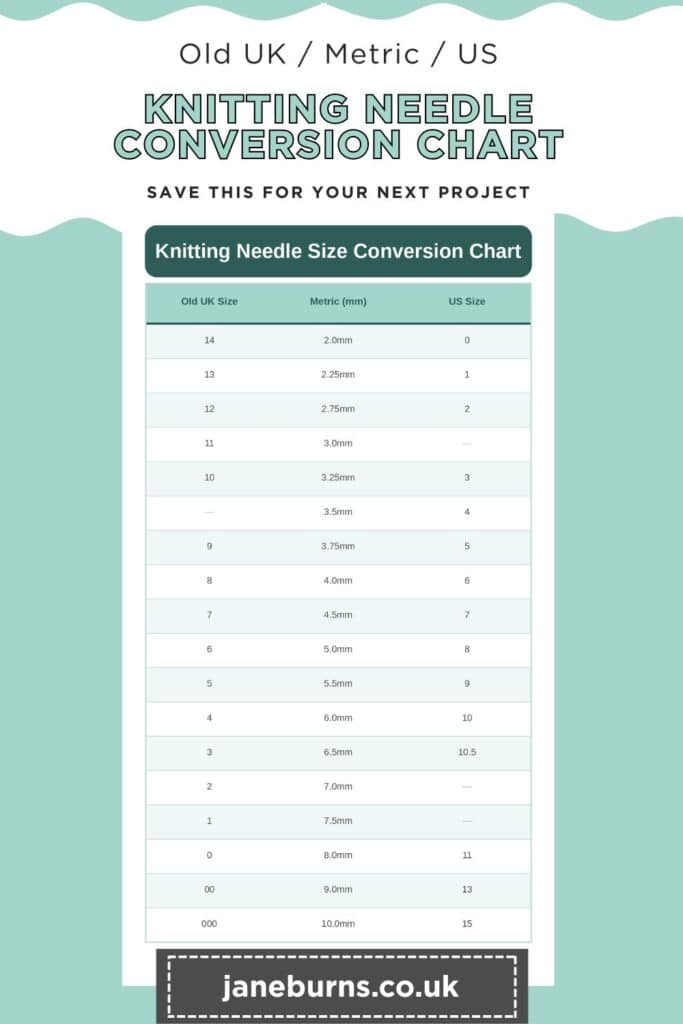
Here’s the complete conversion table. Old UK sizes run from finest (14) to chunkiest (000).
| Old UK Size | Metric (mm) | US Size |
|---|---|---|
| 14 | 2.0mm | 0 |
| 13 | 2.25mm | 1 |
| 12 | 2.75mm | 2 |
| 11 | 3.0mm | — |
| 10 | 3.25mm | 3 |
| — | 3.5mm | 4 |
| 9 | 3.75mm | 5 |
| 8 | 4.0mm | 6 |
| 7 | 4.5mm | 7 |
| 6 | 5.0mm | 8 |
| 5 | 5.5mm | 9 |
| 4 | 6.0mm | 10 |
| 3 | 6.5mm | 10.5 |
| 2 | 7.0mm | — |
| 1 | 7.5mm | — |
| 0 | 8.0mm | 11 |
| 00 | 9.0mm | 13 |
| 000 | 10.0mm | 15 |
Which needle size do I need?
Modern UK or European pattern: It will state metric (e.g. 4mm). Use 4mm. Done.
Vintage UK pattern: Find the old UK size in the left column of the table and read across to metric. Then use the metric size.
US pattern: Find the US size in the right column and read across to metric.
Unmarked or worn needles: Use a needle gauge to measure the diameter in mm, then cross-reference with the metric column.
One thing worth mentioning, the size on the needle is a starting point, not a rule. Your tension matters more than the number. If your tension square is off, go up or down a needle size until you’re getting the right result. The table tells you what size you have. Your swatch tells you what size you need. You did swatch?
If you are on the hunt for vintage knitting patterns, Ravelry is well worth a browse. Their pattern library includes thousands of older designs, many of them free, and their search filters make it straightforward to find patterns by age, yarn weight, or garment type. Just keep your conversion chart handy.
Needle sizes by yarn weight
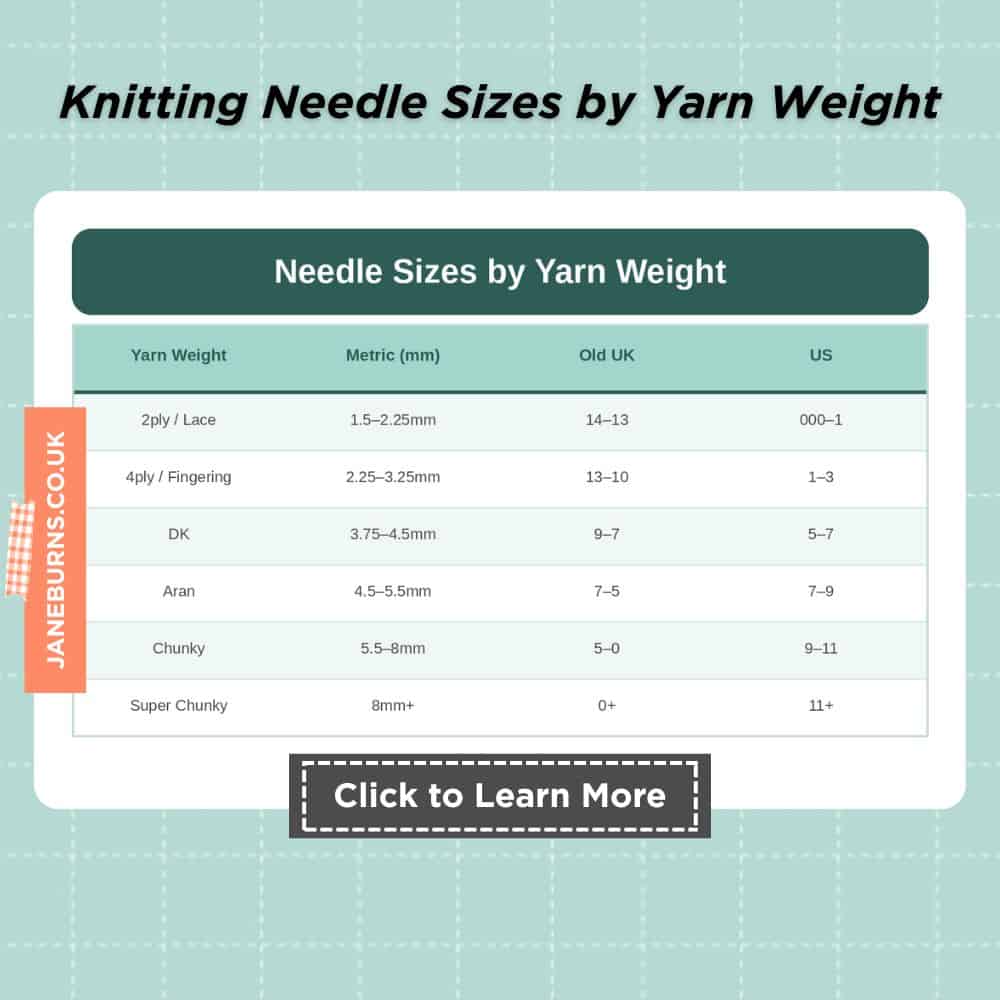
Not sure which needle size to reach for when starting a new project? This is a general guide, always check your pattern and knit a tension square, but this will get you in the right ballpark.
| Yarn Weight | Metric (mm) | Old UK | US |
|---|---|---|---|
| 2ply / Lace | 1.5–2.25mm | 14–13 | 000–1 |
| 4ply / Fingering | 2.25–3.25mm | 13–10 | 1–3 |
| DK | 3.75–4.5mm | 9–7 | 5–7 |
| Aran | 4.5–5.5mm | 7–5 | 7–9 |
| Chunky | 5.5–8mm | 5–0 | 9–11 |
| Super Chunky | 8mm+ | 0+ | 11+ |
One thing worth knowing if you are knitting from a US pattern: American patterns rarely use the term DK. Instead you’ll see worsted or light worsted, which don’t map exactly onto UK weights. The Craft Yarn Council maintains the recognised standard weight system used across US patterns, and their yarn weight guide is a handy reference for translating US weight names into something more familiar.
Keep this page bookmarked, or better yet, print the chart and tuck it into your needle bag. Consider it a companion to the needles themselves. My grandmother’s bag has had a lot of things tucked into it over the years. A conversion chart would have been useful a good deal earlier than this.
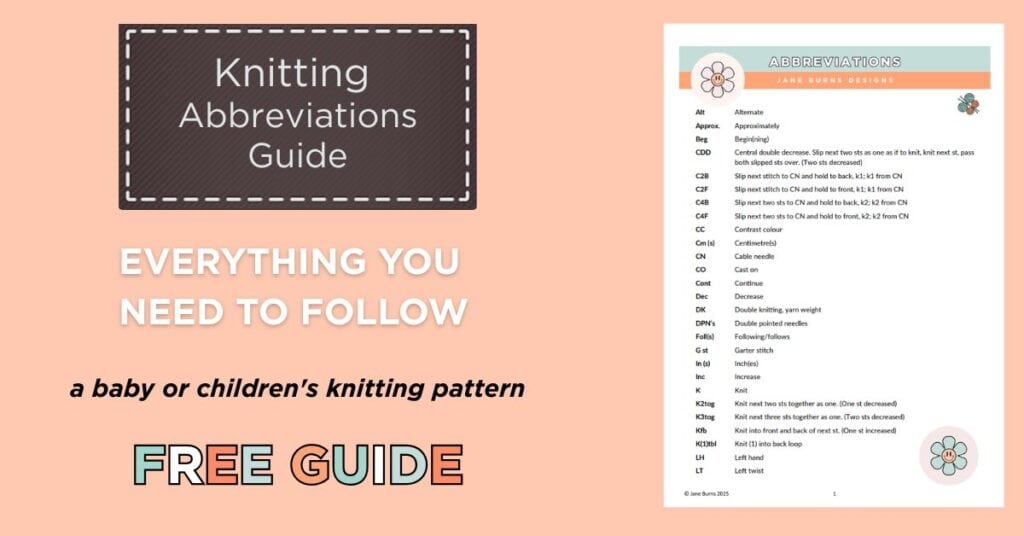
If you found this helpful, you might also want the Knitting Abbreviations Guide and the Baby and Children’s Knitting Size Guide, both live on the blog and both designed to be the last reference you’ll ever need to find again.
These things matter. A conversion chart is just a table, but the needles that sent you looking for one? Those have a story. My grandmother Violet never once needed a chart, she just knew. I am not Violet, (but I do have her name I am Jane Violet), and I am absolutely not too proud to admit I need a chart!
If you have a set of heirloom needles with their own history, I’d love to hear about them. Drop a comment below and tell me whose they were and what you’ve made with them. There is something quietly wonderful about the idea of Violet’s needles, and yours, still turning out beautiful things all these years later.
Does the needle material affect your gauge?
Here’s a thing that catches a lot of knitters out, the size on the needle tells you the diameter, but it does not tell you the whole story.
Metal needles are slippery little things and your stitches glide off them with very little encouragement, which often means a slightly looser gauge. Bamboo and wood have more grip, so stitches sit a bit more obediently and your gauge can come up tighter, even on the exact same size needle. Casein sits somewhere in between and mostly just gets on with it.
None of this means you need a drawer full of every material in every size, lovely as that sounds. It just means if your tension square is being uncooperative, the needles in your hand are worth a thought before you blame your knitting.
Speaking of tension squares, here’s how to actually check yours properly.
Cast on enough stitches to knit a square a bit bigger than 10cm, work in your pattern stitch for a good few inches, then cast off. Lay it flat. Do not stretch it, pin it within an inch of its life, or threaten it. Just let it sit.
Count your stitches and rows across the middle 10cm, away from the edges where everything goes a bit wonky. Compare that to the gauge stated in your pattern. Too many stitches or rows in your swatch, go up a needle size. Too few, go down a size. Then swatch again, because apparently we are doing this properly.
Right, you’ve made it to the end and you now know more about needle sizing than most. Here’s that printable I mentioned earlier.
Pop it in your needle bag, stick it on the fridge, wherever you’ll actually see it again. Future you, mid pattern and squinting at an old needle, will be thanking present you.
What is the equivalent of old UK size 8 knitting needles in metric?
Old UK size 8 knitting needles are 4mm in metric. In US sizing they are a size 6.
What size are old UK size 10 knitting needles in metric?
Old UK size 10 knitting needles are 3.25mm in metric. In US sizing they are a size 3.
Why do old UK knitting needle sizes run backwards?
The old UK system was based on wire gauge sizing, where the number referred to the thickness of the wire used to make the needle. A higher number meant finer wire and therefore a thinner needle. So a size 14 is very fine and a size 000 is chunky, the opposite of what you’d expect today.
What needle size do I need for DK yarn?
For DK yarn you would typically use 3.75mm to 4.5mm needles. In old UK sizing that is a size 9 to a size 7. In US sizing that is a 5 to a 7. Always knit a tension square first as your personal tension may mean you need to go up or down a size.
How do I find out what size my old knitting needles are?
Use a needle gauge, a small flat tool with differently sized holes. Slide your needle into the holes until you find one it fits snugly, and that will give you the diameter in millimetres. You can then use the conversion chart above to find the old UK or US equivalent.
Are old UK knitting needle sizes still used in patterns today?
Not in modern patterns, which now use metric sizing as standard. However old UK sizing still appears in vintage patterns, so a conversion chart is useful if you enjoy knitting from older publications.
About Jane
Jane is a UK based knitting and crochet pattern designer with 18 years of experience, specialising in whimsical, characterful patterns for babies and children. She is the founder of Jane Burns Whimsical Designs, with a focus on patterns that carry real personality, and on making knitting feel accessible, joyful, and a little bit daft when it needs to be.