
Baby & Children’s Knitting Size Guide, Measurements
One of the most common questions I get asked is usually along the lines of “I’m knitting for a 2-year-old, what size should I make?” This baby & children’s knitting size guide is here to help answer that. It’s a deceptively tricky question, because children are wonderfully, chaotically and varied in size. A child wearing age 2–3 in one brand might be in 3–4 from another, and don’t even get me started on shoe sizing.
These baby & child knitting size charts use the standard body measurements published by the Craft Yarn Council, these guys provide the industry standards whose sizing recommendations are followed by most yarn companies, publishers, and pattern designers worldwide. These are actual body measurements, not finished garment measurements, so the children’s knitting measurements here apply regardless of which pattern you’re using.
A couple of important things before we dive in:
- These are average measurements. Real children exist on a spectrum. If you know the child, always measure (or ask their grown-up) rather than going purely by age.
- Knitted and crocheted garments have ease built in. Most patterns are designed with positive ease (extra room) for comfort and movement. Check your pattern’s finished measurements, not just the size label.
- When in doubt, size up. Children grow, quickly. A slightly oversized jumper in October becomes perfectly fitted by Christmas.
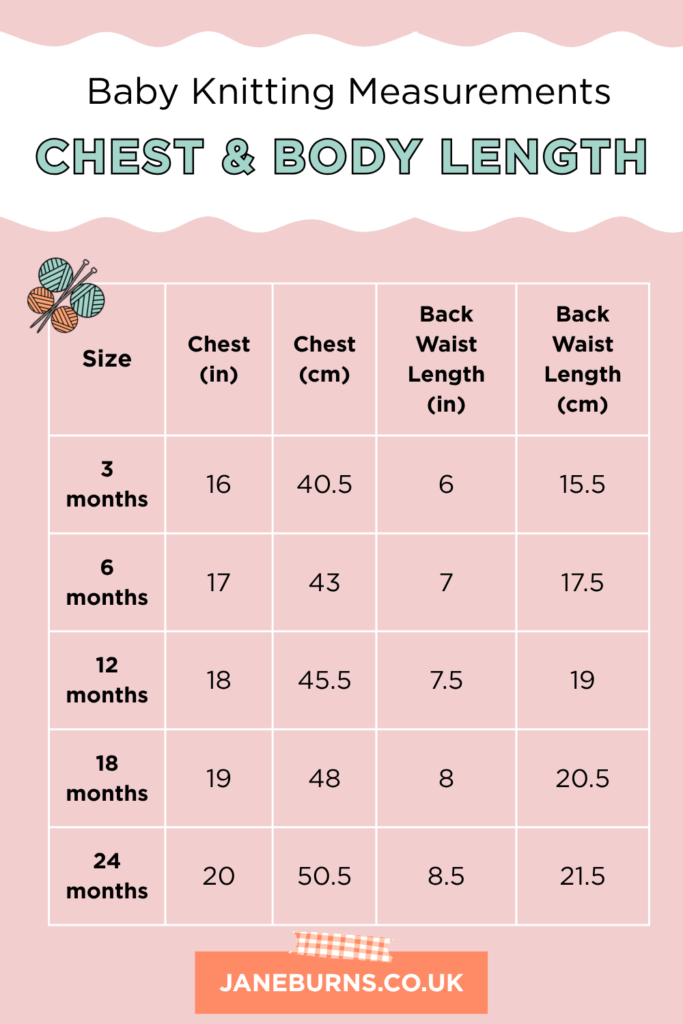
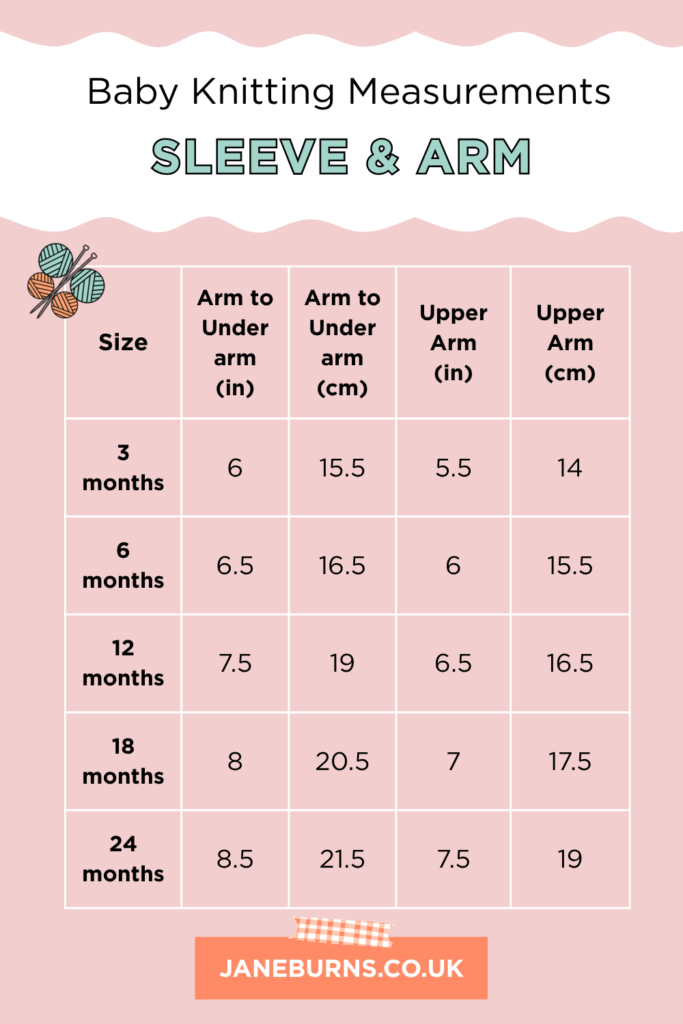
Baby Knitting Measurements: 3 Months to 24 Months
These are the Craft Yarn Council standard baby knitting measurements. Size labels in this range refer to the age the size is designed to fit, but as any parent will tell you, babies have strong opinions about charts.
Source: Craft Yarn Council Baby Size Chart
Back waist length is measured from the prominent bone at the back of the neck straight down to the natural waist. Arm to underarm is wrist to underarm (your sleeve length guide). Upper arm is the circumference at the fullest part of the upper arm. To keep this post readable and super ‘shareable’ (pretty please share this particularly on Pinterest), the tables in this Baby & Children’s Knitting Size Guide have been produced in four tables.
Children’s Knitting Measurements: Size 2 to Size 16
The Craft Yarn Council uses size labels rather than age labels for children’s knitting measurements. Use this baby & children’s knitting size guide by age as a rough guide only, and always cross-reference with actual measurements where you can.
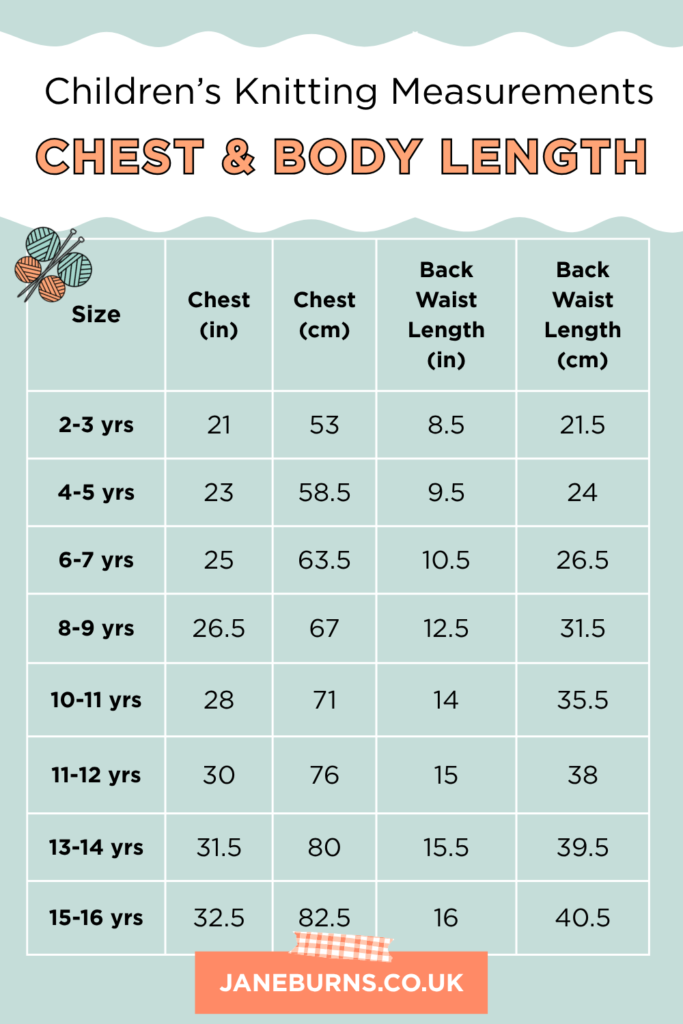
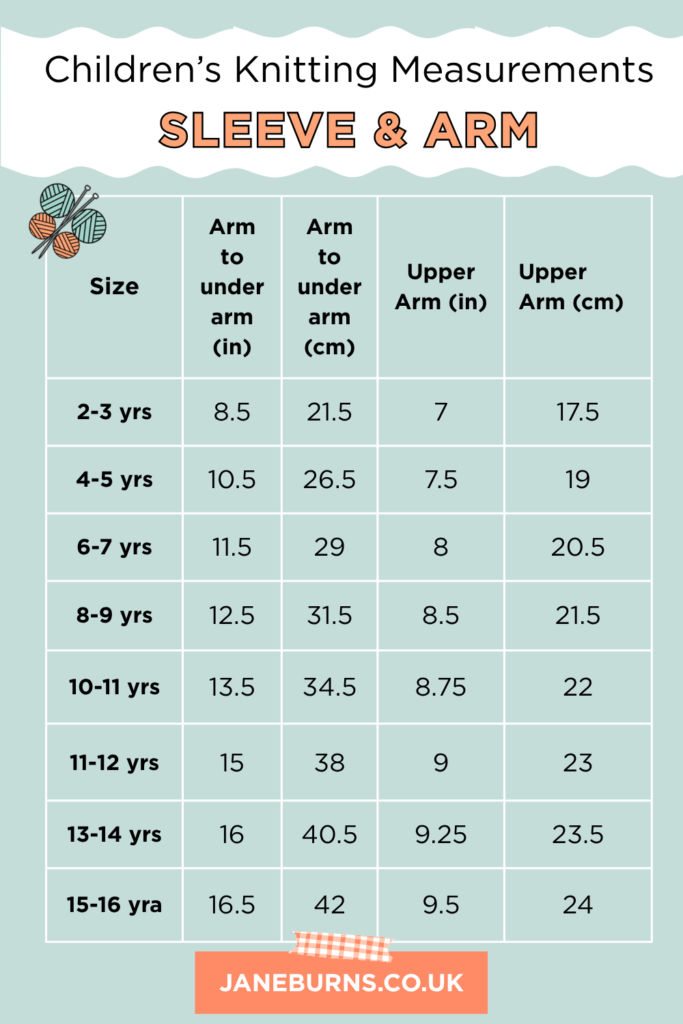
Source: Craft Yarn Council Child/Youth Size Charts
Baby & Children’s Hat Size Guide: Head Circumference by Age
Head circumference for this baby hat size guide is given in broad bands across age groups, which actually reflects reality well, since heads don’t grow in neat annual increments. Always measure when you can rather than relying on age alone.
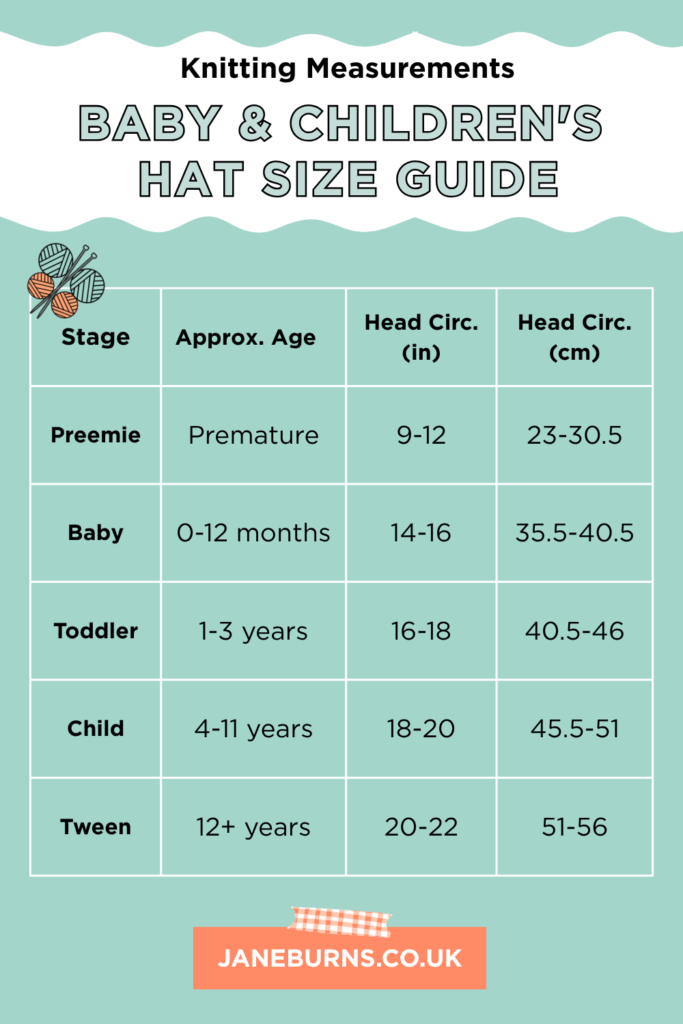
Source: Craft Yarn Council Head Circumference Chart
Hat patterns typically include 1–2 inches / 2.5–5 cm of negative ease, meaning the finished hat is slightly smaller than the head, so it grips rather than falls off. Always check the notes in your specific pattern.
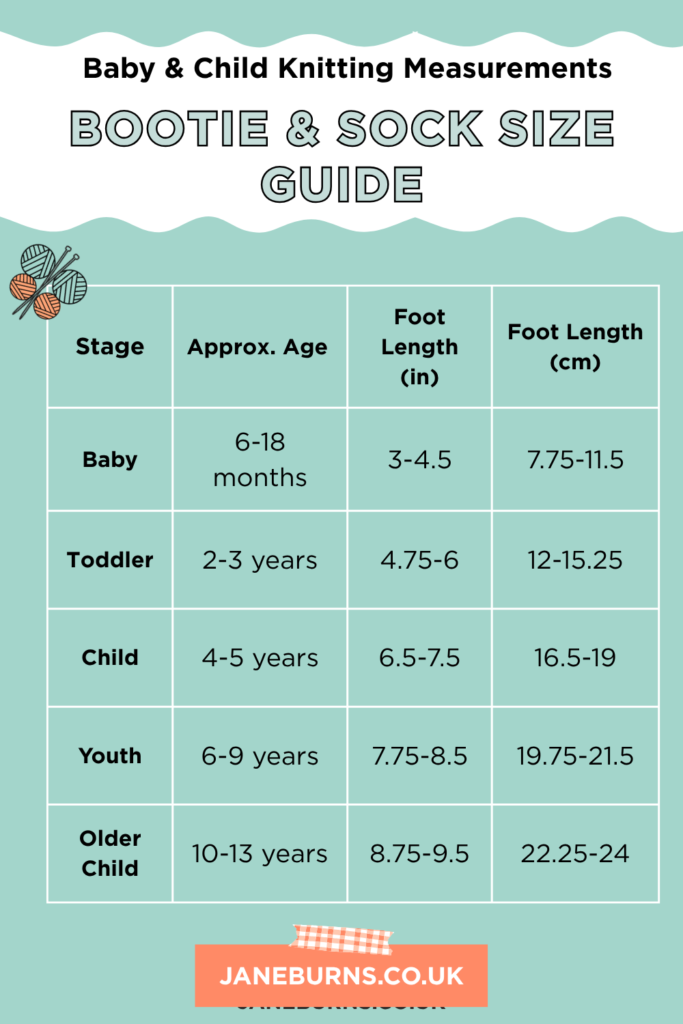
Baby Bootie & Sock Size Guide: Foot Length by Age
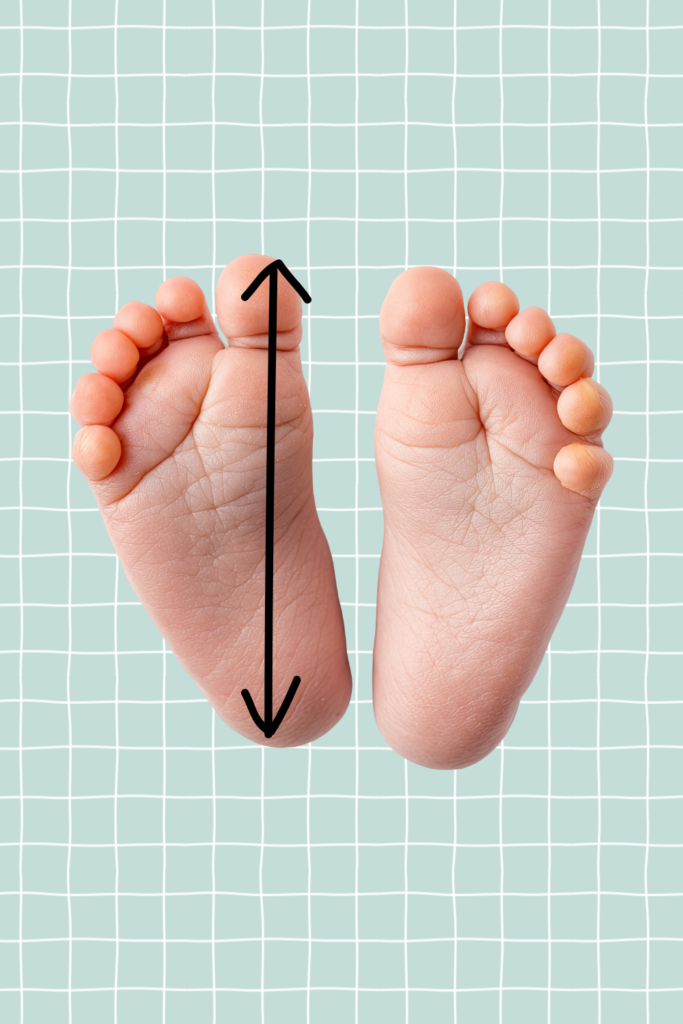
Foot measurements in this baby bootie size guide are given as ranges since feet, like everything else about children, vary considerably within any age group. Total foot length is measured heel to toe.
Source: Craft Yarn Council Foot Size Chart
For booties and baby socks, measuring the actual foot is always more reliable than going by age, foot length can vary by 1–2 cm within the same age group. This baby and children’s knitting size guide is here to the rescue.
How to Measure a Child for Knitting
Getting accurate children’s knitting measurements is half the battle. Here’s how to take each one properly, ideally with a flexible tape measure and a wriggly child who has been bribed with a biscuit. Yes you can have a biscuit too!
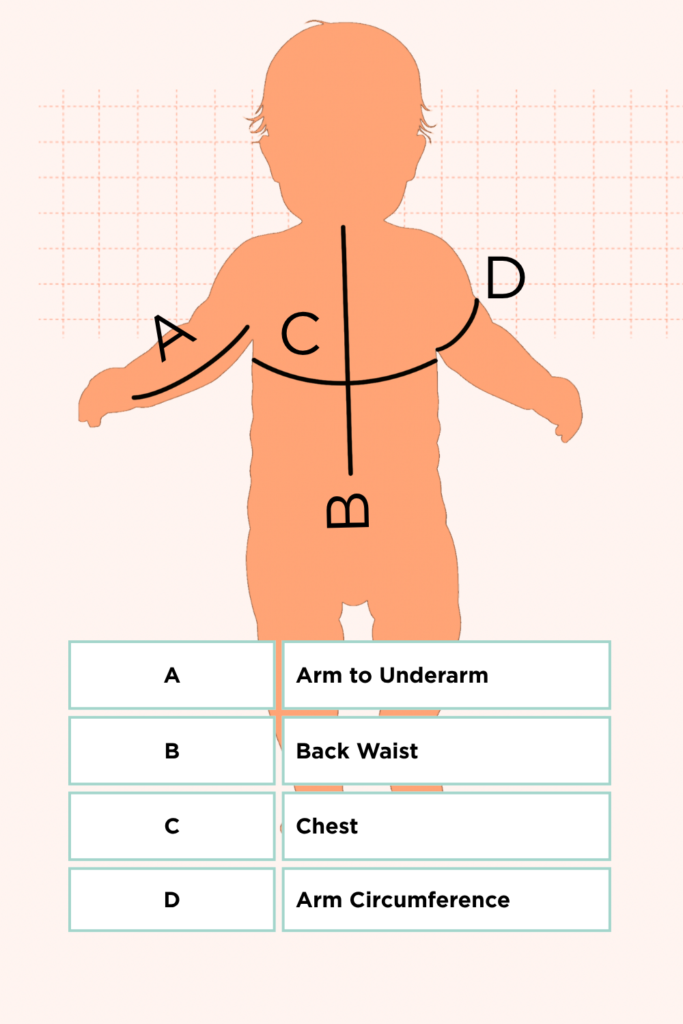
Chest
Measure around the fullest part of the chest, keeping the tape horizontal and snug but not tight. For babies, this is easiest when they’re lying down.
Back Waist Length
Measure from the prominent bone at the back of the neck straight down to the natural waistline. This tells you body length.
Arm Length to Underarm
Measure from the wrist up to the underarm. For a child, it’s easiest with their arm slightly bent at the elbow. This gives you sleeve length.
Head Circumference
Wrap the tape around the widest part of the head, just above the ears and across the forehead. Essential for hats, hoods, and necklines.
Foot Length
Place the foot flat on a piece of paper, mark the heel and the tip of the longest toe, and measure the distance between the marks. This is what you need for booties and socks.
Tips for Knitting the Right Size for Children
Check the pattern’s finished measurements, not just the size label.
A pattern labelled “size 4” might be designed with 5 cm of ease or 10 cm of ease. The finished garment measurements tell you what you’re actually making. Compare those to your child’s measurements, then decide.
Head circumference is your friend for hats
Age labels on hat patterns are notoriously unreliable. Always knit to the head circumference measurement. A child with a larger or smaller head for their age will thank you.
Always swatch
A tension difference of even half a stitch per 10 cm can change the finished size of a child’s jumper significantly. Swatching takes 20 minutes. Reknitting an entire body does not. I know you have heard it a thousand times, so forgive me for mentioning it here too…
Knit the larger size if you’re between two
Children grow. A slightly too-big jumper is worn all season. A slightly too-small one gets one outing and a look of quiet betrayal from its recipient.
Watch the neckline opening
Particularly for babies, make sure the neckline is wide enough to go over the head easily. Most baby patterns account for this, but it’s worth checking if you’re adapting an adult pattern or working from a vintage design.
Related Posts You Might Find Useful
- Knitting for Babies and How to Get It Right — yarn choices, safety considerations, and construction tips for baby knits.
- Knitting Abbreviations Guide — Knitting Abbreviations Guide: What They All Mean
- Crochet Abbreviations Guide — coming soon!
- Needle & Hook Size Conversion Chart — coming soon!
All measurements in this baby & children’s knitting size guide are taken directly from the Craft Yarn Council’s Standard Body Measurements the industry standard used by most yarn companies and pattern publishers worldwide.
If you’ve got a pattern from my shop or blog that you’d like sizing advice on, drop me a message, I’m always happy to help.
Happy knitting! 🧶
Jane x