Hat patterns come with age labels. This children’s hat size chart knitting guide is here to tell you that age labels lie. A two-year-old with a 90th percentile head will not thank you for a hat that fits a two-year-old on the label and a small grapefruit in real life.
If you have ever knitted a hat for a child and watched them politely attempt to wear it, you will know exactly what I mean. You never forget that frown.
Making a garment to go with that hat? The Baby and Children’s Knitting Size Guide covers chest, body length, sleeve and foot measurements, with charts from newborn to age 16.
Quick Look
What you’ll find in this post:
- How to measure a child’s head for a hat, using head circumference and head length
- A full children’s hat size chart for knitting, from premature to age 11
- How negative ease works for babies and children’s hats
- A note on earflap hats and the one extra measurement they need
- Sizing data credited to Woolly Wormhead’s hat sizing guide

Always know your child’s measurements
The most important number for knitting a hat that actually fits is your child’s head circumference. Once you have managed to measure your little darling, keep those measurements somewhere safe.
This free printable measurement record gives you space to note down all your child’s key measurements, including head circumference, so you have everything to hand whenever you start a new project. No more digging out the tape measure and toddler wrangling at 10pm.
Pop your email in below and I’ll send it straight to your inbox.
This children’s hat size chart for knitting is based on head measurements, not age, and that single shift makes all the difference. Whether you are knitting for a new baby, a toddler, or a school-age child who has declared a strong preference for dinosaurs, measuring the head first is the only reliable way to get a hat that actually fits.
The sizing data in this guide comes from Woolly Wormhead, widely known as the Hat Architect. Her sizing guide has become the standard reference for hat knitters around the world, which is exactly why I use it here. The baby and children’s application of it is mine. If hats are your thing, her work at woollywormhead.com is worth a very long look.
How to Measure a Child’s Head for a Knitting Hat
Before you look at the chart, you need two numbers. Just two. A tape measure, a cooperative child, and about forty-five seconds is all it takes. Less if the child is asleep.
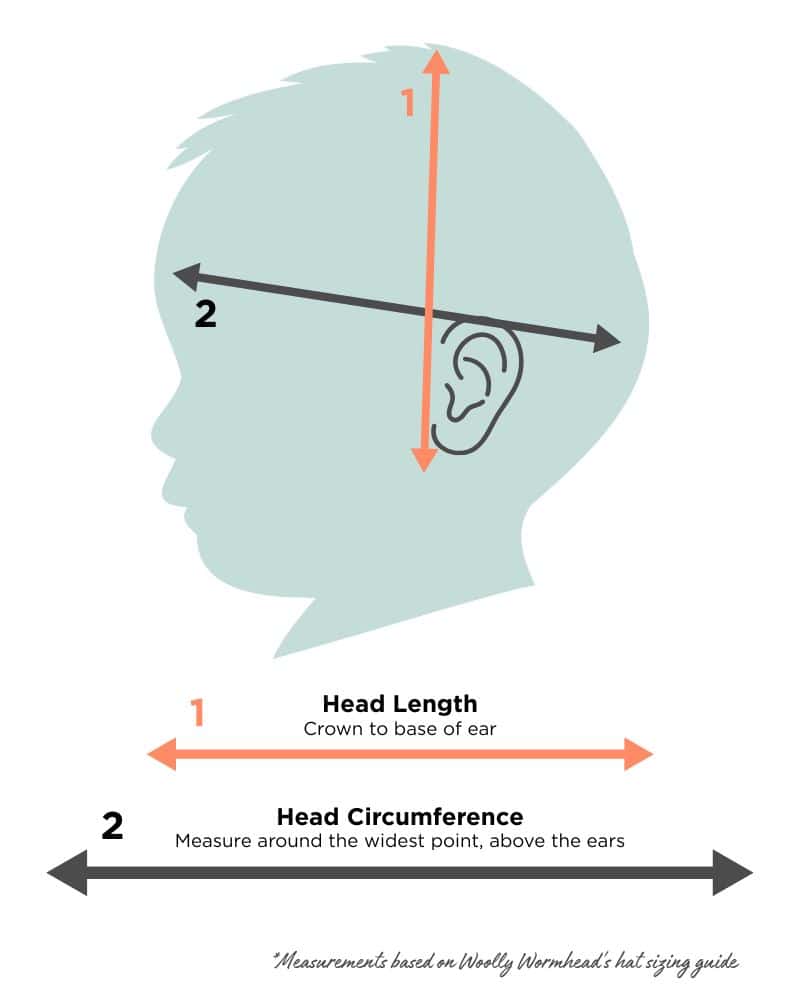
Refer to the diagram above as you take each measurement.
1. Head Circumference
Head circumference is the measurement that appears in almost every hat pattern you will ever knit from. It is taken by wrapping a soft tape measure around the widest part of the head, sitting just above the ears and across the forehead. Keep the tape snug but not tight, over the hair rather than against the scalp.
This is the number that tells you which column to look at in the children’s hat size chart for knitting below.
2. Head Length
Head length is measured from the crown of the head straight down to the base of the ear. This measurement tells you how tall the hat needs to be to sit correctly, covering the ears without swamping them.
It is the measurement most knitters skip, and it is the one that explains why a hat can have a perfect circumference and still sit at a strange angle. Crown shaping, brim depth, and overall hat height all depend on it.
Take both measurements and write them down before you go anywhere near the chart. It takes ten seconds and saves considerable unpicking later.
Children’s Hat Size Chart for Knitting: Head Measurements by Age
The chart below gives head circumference and head length measurements from premature through to age 11. Use the head circumference column to choose your size, and the head length column to check the hat height will work for the child you are knitting for.
A note on the age column: it is a guide only. Children’s heads vary enormously. Always go by the measurement, not the age. A child measuring 48cm head circumference needs a hat sized to 48cm, regardless of whether they are two or four.
Both metric and imperial measurements are given. Use whichever your pattern works in.
Measurements sourced from Woolly Wormhead’s Hat Sizing Guide at woollywormhead.com
| Size | Approx. Age | Head Circumference | Head Length (Crown to Base of Ear) |
|---|---|---|---|
| Preemie | Premature | 30.5cm / 12in | 11cm / 4.25in |
| Newborn | Newborn | 35.5cm / 14in | 12.5cm / 5in |
| 6 months | Around 6 months | 40.5cm / 16in | 14.5cm / 5.75in |
| 12 months | Around 12 months | 45.5cm / 18in | 16.5cm / 6.5in |
| Child | Approx. 2–11 years | 50.5cm / 20in | 18.5cm / 7.25in |
How to Use This Children’s Hat Size Chart for Knitting
Once you have your two measurements, here is how to use them alongside a hat pattern.
Step 1: Find your head circumference in the chart
Look down the head circumference column and find the measurement closest to the one you have taken. If the child’s measurement falls between two sizes, choose the smaller of the two. Hat fabric is stretchy and a small amount of negative ease, where the hat is slightly smaller than the head it fits, is what gives a hat its snug, comfortable fit.
Step 2: Check the head length
Once you have identified the right size by circumference, check the head length figure for that size against the child’s measurement. If the child has a longer head length than the chart shows for their circumference size, you may need to work a few extra rows before starting the crown decreases. Your pattern will usually tell you how to do this.
Step 3: Check the pattern’s finished measurements
A well-written hat pattern will give you two measurements: the size it is designed to fit, and the finished size of the hat itself. The finished size will always be smaller than the head it fits. This is negative ease doing its job. For babies and young children, the difference is usually around 2 to 3cm. For older children, it can be a little more.
If you are using one of my patterns, all finished measurements are given clearly so you can check before you cast on.
A worked example: the Dinosaur Hat
The Dinosaur Hat and Mitten Set is a good example of how this works in practice. It is an earflap hat, which means the head circumference and head length both affect the fit. Find the child’s head circumference in the children’s hat size chart for knitting above, check the head length, and choose your size accordingly. The pattern does the rest.
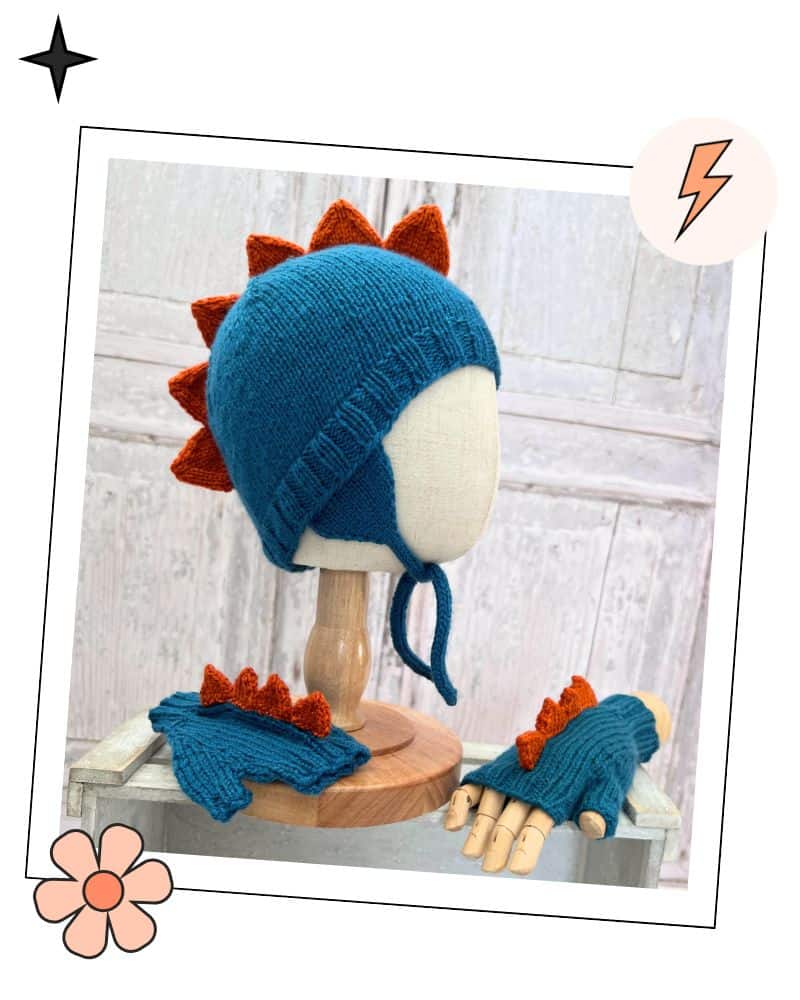
The Dinosaur Hat and Mitten Set, an earflap hat pattern for babies and children. Find the full pattern here.
Knitting an Earflap Hat? Here Is the One Extra Measurement You Need
Most hat styles need just the two measurements from the chart above. Earflap hats need one more.
The earflaps need to sit over the ears, not in front of them or behind them. To position them correctly, you need to know the mid-ear to mid-ear measurement, which is the distance from the centre of one ear to the centre of the other. This measurement is taken twice, once across the front of the head and once across the back, and the two numbers will be different. The ears sit slightly forward on the head, which means the front measurement is always wider than the back.
For most children’s earflap hat patterns, the pattern itself will tell you where to place the earflaps based on the size you are knitting. If you are working from a pattern that gives earflap placement instructions, follow those. If you are designing your own or adapting a pattern, the mid-ear to mid-ear measurements from Woolly Wormhead’s sizing guide are the most reliable reference available.
For a practical example of how earflap placement works in a children’s hat pattern, the Dinosaur Hat and Mitten Set has clear earflap instructions sized from baby through to age 7. It is a good one to start with if earflap hats are new territory.
Children’s Hat Size Chart Knitting: Frequently Asked Questions
What size hat should I knit for a newborn?
A newborn head circumference is typically 35.5cm (14 inches). Use that measurement to cast on rather than relying on a pattern’s newborn label, as sizing varies between designers. If you are knitting before the baby arrives and cannot measure, the newborn row in the children’s hat size chart for knitting above is your safest starting point.
What head circumference should I knit for a 1 year old?
A typical one year old has a head circumference of around 45.5cm (18 inches). Children’s heads grow quickly in the first year, so if the child is on the larger side, measure first rather than assuming. A hat knitted to the measurement will always fit better than one knitted to the age label.
How many centimetres is a child’s head for knitting a hat?
A typical child aged 2 to 11 years has a head circumference of around 50.5cm (20 inches), though this varies considerably across that age range. Always measure the individual child rather than relying on age alone. The children’s hat size chart for knitting above covers premature through to age 11 in both metric and imperial.
What is head length in hat knitting?
Head length is the measurement from the crown of the head straight down to the base of the ear. It tells you how tall the hat needs to be to sit correctly, covering the ears without swamping them. It is shown as measurement 1 in the diagram above. Most hat patterns use head circumference as the primary sizing measurement, but checking the head length means you can adjust the hat height if needed before you start the crown decreases.
What size hat should I knit for a 5 year old?
A five year old typically falls within the child size in the chart, with a head circumference of around 50.5cm (20 inches). Measure the child’s head if you can, as children of the same age can vary by several centimetres. If the child has a larger head than average for their age, go up a size and add a few extra rows before starting the crown shaping.
Ready to Cast On?
Getting the size right before you cast on is the single most useful thing you can do for the person who will eventually wear the hat. Two measurements, five minutes, and the children’s hat size chart for knitting above will tell you everything you need to know.
If you are looking for a children’s hat pattern to put these measurements to work, the Dinosaur Hat and Mitten Set is a good place to start. It is an earflap hat for babies and children, sized from premature through to age 7, with clear instructions and a finished hat that actually stays on. You can find more baby and children’s hat patterns, plus the full range of whimsical knitting and crochet patterns for babies and children, in the shop.
For body measurements and sizing across all garment types, the Baby and Children’s Knitting Size Guide covers chest, height, sleeve length, and more. Worth bookmarking if you knit for children regularly.
Happy knitting,
Jane
Stay in Touch
If you would like new patterns, free resources, and the occasional dry observation about knitting for children delivered straight to your inbox, you can join the list here: